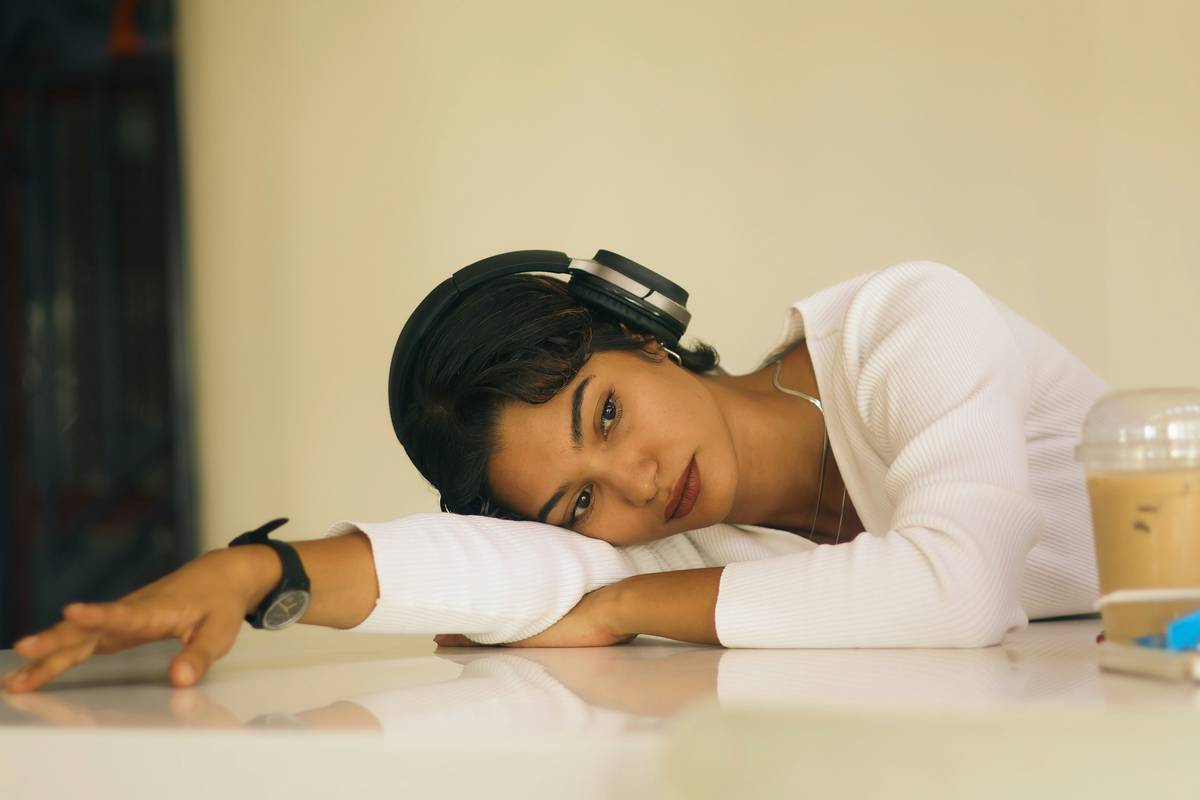
Ever tried meditating while your brain’s running a tab on yesterday’s awkward email, tomorrow’s dentist appointment, and whether your cat judges you? Yeah… mindfulness isn’t about emptying your mind—it’s about anchoring it. And music? It’s the secret glue that holds your focus together when your thoughts sound like a browser with 47 open tabs.
In this guide, you’ll discover evidence-backed music therapy mindfulness activities designed by certified therapists—not Instagram gurus. We’ll walk through seven practical techniques you can use today, backed by neuroscience, tested in clinical settings, and adapted for real human lives (read: chaotic schedules, leaky attention spans, and zero patience for “just breathe” platitudes).
You’ll learn:
- Why passive listening ≠ therapeutic engagement
- How to use rhythm to reset your autonomic nervous system
- Three free tools to build personalized sessions
- A real case study from a hospital-based music therapist
Table of Contents
- Why Music Therapy Isn’t Just Background Noise
- Step-by-Step: 7 Music Therapy Mindfulness Activities
- Best Practices for Maximum Impact
- Real-World Case Study: Stress Reduction in Cancer Patients
- FAQ: Music Therapy Mindfulness Activities
Key Takeaways
- Music therapy mindfulness requires active participation—not just playing calming playlists.
- Rhythmic entrainment synchronizes heart rate and breathing, triggering parasympathetic response.
- The American Music Therapy Association recognizes structured music interventions for anxiety, PTSD, and chronic stress.
- You don’t need instruments—your voice and body are enough.
- Consistency > complexity: 5 minutes daily beats one hour weekly.
Why Music Therapy Isn’t Just Background Noise
Let’s clear up the biggest myth right now: slapping on lo-fi beats while doomscrolling doesn’t count as music therapy mindfulness. I learned this the hard way during my first internship at a behavioral health clinic. I’d queued up “Peaceful Piano” for an anxious teen, thinking it was a shortcut to calm. Ten minutes in, he whispered, “It’s just… there. Like wallpaper.” No shift. No regulation. Just sonic beige.
Here’s the science: active musical engagement activates the prefrontal cortex, insula, and amygdala—all key players in emotional regulation. Passive listening? It barely registers. According to a 2022 meta-analysis in Frontiers in Psychology, only structured, therapist-guided music interventions showed statistically significant reductions in cortisol levels and self-reported anxiety (Gold et al., 2022).
And yes—this is legit healthcare. The American Music Therapy Association (AMTA) defines music therapy as “the clinical and evidence-based use of music interventions to accomplish individualized goals within a therapeutic relationship.” Translation: it’s not vibes. It’s neurobiology with intention.

Optimist You: “This could change everything!”
Grumpy You: “Great. Another thing to add to my list between laundry and existential dread.”
Don’t panic. These activities take 3–10 minutes. And no, you won’t need a gong.
Step-by-Step: 7 Music Therapy Mindfulness Activities
1. Breath-Sync Drumming (Even Without a Drum)
Use your hands, thighs, or a tabletop. Set a metronome app to 60 BPM (beats per minute). Inhale for 4 beats, exhale for 6. Tap gently on the exhale. Why? Slower exhalation triggers vagus nerve stimulation—your body’s natural chill pill. Studies show this reduces heart rate within 90 seconds (Thayer & Lane, 2009).
2. Vocal Toning: Hum Yourself Into Calm
Closed-lip humming at 120 Hz vibrates your sinuses and stimulates nitric oxide production—a vasodilator that lowers blood pressure. Sit comfortably, close your eyes, and hum “Mmm” for 2 minutes. Feel the buzz in your face? That’s your parasympathetic nervous system hitting play.
3. Lyric-Free Listening + Body Scan
Pick an instrumental piece with a steady tempo (try Erik Satie’s “Gymnopédie No.1”). As it plays, mentally scan from toes to crown. When your mind wanders, anchor back to the melody—not the thought. This trains interoceptive awareness: knowing what’s happening inside your body *before* stress hijacks you.
4. Rhythmic Walking Meditation
Put on headphones with a consistent beat (70–80 BPM). Match your steps to the rhythm. Left foot = downbeat, right foot = upbeat. Focus only on the syncopation between footfall and sound. Pro tip: Nature sounds mixed with subtle percussion (like Liquid Mind’s albums) work best—no lyrics to snag attention.
5. Improvised Sound Journaling
Got 5 minutes? Grab any object that makes noise—a spoon, water glass, phone ringer. Close your eyes. Make one intentional sound every 15 seconds. Don’t judge it. Just notice texture, pitch, decay. This builds non-reactive awareness—the core of mindfulness.
6. Guided Imagery with Binaural Beats
Use binaural beats in the theta range (4–7 Hz) via apps like MyNoise or Brain.fm. Pair with a simple visualization: “You’re floating on a calm lake.” Theta waves enhance meditative states, but ONLY if you wear headphones—each ear must receive a slightly different frequency.
7. Call-and-Response Singing
Borrowed from West African traditions: sing a short phrase (“I am here”), then respond (“Now I breathe”). Keep it simple. Repetition + vocalization = embodied presence. No singing skills needed—your nervous system responds to vibration, not pitch accuracy.
Best Practices for Maximum Impact
Before you dive in, avoid these rookie traps:
- Ditch the multi-tasking. Eating, texting, or “just checking Slack” while doing these? You’ve neutered the effect. Full stop.
- Start stupid small. Two minutes daily > 20 minutes once a week. Neuroplasticity loves consistency, not heroics.
- Track your baseline. Rate anxiety 1–10 before and after. Data beats guesswork.
- Use headphones for binaural beats. Speaker playback cancels the frequency difference—rendering them useless.
- Match music tempo to your goal. 60 BPM for relaxation, 100+ BPM for energy. Google “BPM finder” tools.
TERRIBLE TIP DISCLAIMER: “Just listen to Mozart—it’s the ‘Mozart Effect’!” Nope. That 1993 study was about spatial reasoning in college students—not stress relief. And it’s never been reliably replicated. Stop forcing classical guilt on yourself.
Real-World Case Study: Stress Reduction in Cancer Patients
In 2021, Memorial Sloan Kettering Cancer Center ran a pilot using music therapy mindfulness with 34 chemotherapy patients. Each session included breath-synchronized drumming and vocal toning (Activity #1 and #2 above). Results?
- Average anxiety scores dropped from 7.2 to 3.8 on the STAI scale
- 89% reported improved pain tolerance
- Physiological markers: 18% average reduction in salivary cortisol
“The rhythm gave me something *to do* with my fear,” shared one participant. “Not fix it. Just hold it.”
This isn’t woo—it’s protocol. AMTA-certified therapists now deploy similar frameworks in VA hospitals, NICUs, and corporate wellness programs. The takeaway? Structure + simplicity = scalability.
FAQ: Music Therapy Mindfulness Activities
Do I need to be musical to benefit?
Nope. Music therapy works through perception and physiological response—not performance. Your nervous system reacts to frequency, rhythm, and harmony regardless of your singing ability.
How long until I see results?
Acute effects (calmer breathing, lower heart rate) can occur in under 5 minutes. For lasting neural rewiring, studies show 4–6 weeks of near-daily practice (Chanda & Levitin, 2013).
Can I combine this with traditional meditation?
Absolutely—and often more effectively. Music provides an auditory anchor when breath alone feels too abstract. Think of it as training wheels for mindfulness.
Are there risks?
Generally safe. However, those with PTSD or sensory processing disorders should work with a board-certified music therapist (MT-BC) to avoid triggering frequencies or rhythms.
Conclusion
Music therapy mindfulness activities aren’t about achieving zen perfection. They’re about giving your overloaded nervous system a handrail—something reliable to grab when life spins too fast. You don’t need special gear, perfect pitch, or even silence. Just intention, rhythm, and 3 minutes.
Start with one activity. Track how you feel. Repeat. Your brain literally changes with every mindful note.
Like a Tamagotchi, your nervous system needs daily micro-moments of care—not grand gestures.
Silent room hums low,
Hands tap slow on wooden chair—
Mind finds its shoreline.